

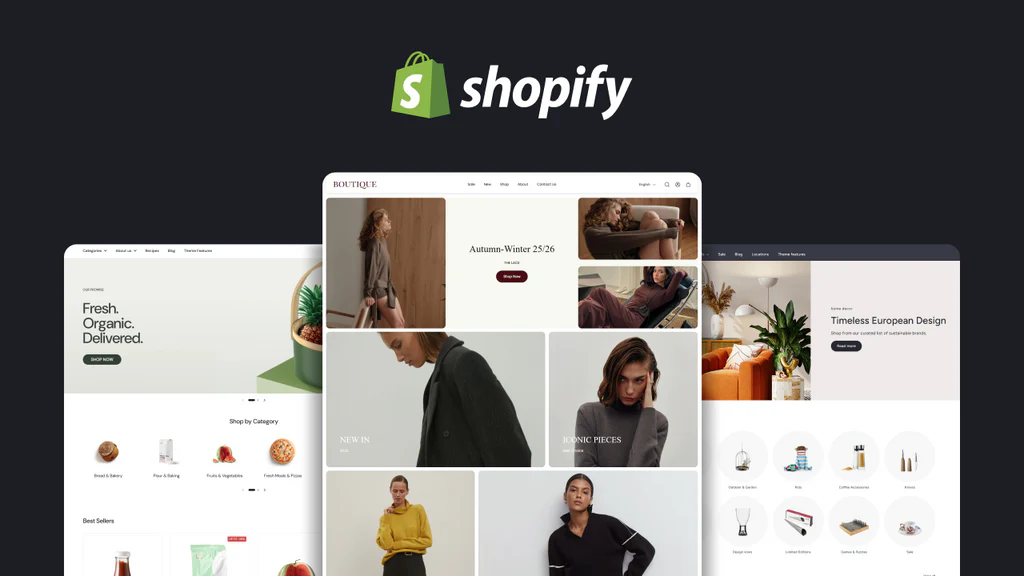
A Shopify store is not just a website where you list products. In modern e-commerce, it is the foundation of your entire business. Many beginners believe that success comes from finding a winning product, but in reality, even winning products fail on poorly built stores.
A high-converting Shopify store is designed with psychology, trust, speed, and clarity in mind. Every element of the store has one purpose: to guide a visitor toward making a purchase without confusion or hesitation.
In 2026 and beyond, customers are more aware, more selective, and less patient. This means your store must feel professional within seconds or the visitor leaves. Building a store is no longer about design only—it is about conversion engineering.
Understanding What Makes a Store High-Converting
A high-converting Shopify store is not defined by how beautiful it looks, but by how effectively it turns traffic into sales.
There are four main factors that decide conversion rate: trust, clarity, speed, and emotional impact.
Trust means the customer feels safe buying from your store. Clarity means they instantly understand what you are selling and why it matters. Speed refers to how fast your site loads and how smooth the shopping experience is. Emotional impact is what creates desire and urgency in the buyer’s mind.
If any of these four elements are weak, conversion rates drop significantly.
Store Structure and Branding Foundation
The first step in building a high-converting store is setting a strong foundation. This starts with branding.
Your store name should feel like a real brand, not a random dropshipping shop. Customers are more likely to buy from a brand they trust. A strong brand name is short, memorable, and niche-relevant.
Next is visual identity. This includes logo, colors, fonts, and overall design consistency. The goal is to create a professional look that builds instant credibility.
A common mistake beginners make is overdesigning their store. Too many colors, animations, and unnecessary elements reduce trust. Modern high-converting stores are simple, clean, and focused.
Homepage Optimization for Maximum Conversions
The homepage is the first impression of your store. It must immediately communicate what your brand is about.
The top section, called the hero section, should clearly show your main product or value proposition. Within seconds, visitors should understand what problem your store solves.
Scrolling down, the homepage should include social proof such as reviews, customer testimonials, or trust badges. People rely heavily on social validation before making decisions.
Another important element is product highlights. Instead of overwhelming visitors with too many options, successful stores focus on a few key products that represent the brand.
The homepage should guide users naturally toward product pages without confusion or distractions.
Product Page Optimization Strategy
Product pages are where sales actually happen. This is the most critical part of your store.
A high-converting product page focuses on benefits rather than technical features. Customers do not care about specifications—they care about results and improvements.
The product description should clearly explain how the product solves a problem or improves the customer’s life. It should be written in simple, persuasive language.
High-quality images and videos are extremely important. Visual content helps customers understand the product faster and builds trust.
Reviews and user-generated content are also essential. People trust other customers more than brand claims.
Another important element is urgency. Limited stock, discount timers, or scarcity messaging can increase conversions when used correctly.
Trust Building Elements
Trust is one of the biggest factors in e-commerce success. Without trust, even the best product will not sell.
A high-converting store includes clear policies such as shipping, returns, and refunds. These pages reduce customer hesitation.
Security badges and payment icons also increase trust by showing that transactions are safe.
Another powerful trust factor is transparency. Clear contact information and brand story help customers feel more comfortable.
Social proof is also critical. Reviews, ratings, and customer photos significantly increase conversion rates.
Checkout Optimization
The checkout process is where many sales are lost. If the checkout is slow or complicated, customers abandon their carts.
A high-converting store has a simple and fast checkout process. It should require minimal steps and avoid unnecessary distractions.
Multiple payment options also improve conversion rates. Customers should be able to pay using their preferred method.
Another important factor is reducing friction. The fewer clicks required to complete a purchase, the higher the conversion rate.
Mobile Optimization
Most e-commerce traffic today comes from mobile devices. This means your store must be fully optimized for mobile users.
Mobile optimization includes fast loading speed, easy navigation, and responsive design.
Buttons should be easy to tap, text should be readable, and images should load quickly.
A poorly optimized mobile store loses a large portion of potential sales.
Conversion Psychology in E-commerce
Understanding customer psychology is key to building a high-converting store.
People buy based on emotion and justify with logic. This means your store must create desire first, then provide logical reasons to buy.
Scarcity is a powerful trigger. When customers believe a product is limited, they are more likely to purchase quickly.
Authority also plays a role. If a product appears popular or widely used, it builds confidence.
Another psychological factor is simplicity. When customers are overwhelmed with too many choices, they often do nothing. Simple stores convert better.
Common Mistakes in Shopify Store Building
Most beginners fail because they focus on design instead of conversion strategy.
One common mistake is using too many apps that slow down the store. Speed is critical for conversions.
Another mistake is copying random store designs without understanding strategy behind them.
Some also ignore branding and create generic-looking stores that fail to build trust.
Overloading the homepage with too much information also reduces clarity and confuses visitors.
Final Thoughts
A high-converting Shopify store is not built by chance. It is carefully designed using psychology, structure, and optimization principles.
Every element—from branding to product pages to checkout—is designed to guide the customer toward a purchase.
Success in e-commerce is not only about finding products but about building systems that convert traffic into revenue consistently.
When your store is optimized for trust, clarity, speed, and emotion, your conversion rate increases significantly, and your business becomes more stable and scalable.
FAQ (Frequently Asked Questions)
1. What makes a Shopify store high-converting?
A high-converting store is built on trust, clarity, fast performance, and emotional appeal. It guides users smoothly toward purchase.
2. How many products should I add to my store?
It is better to focus on a few strong products rather than adding too many random items. Focus improves conversions.
3. Why are my Shopify visitors not buying?
Usually due to weak product pages, lack of trust signals, slow website, or poor messaging.
4. Do I need a professional design to succeed?
Yes, but simplicity is more important than complex design. Clean and professional layout converts better.
5. How long does it take to improve conversion rate?
Conversion optimization is continuous. Improvements can be seen within days or weeks depending on changes.