
Modern e-commerce is moving away from manual work and shifting toward fully system-driven businesses powered by AI and automation. The stores that scale today are not the ones working harder—they are the ones working smarter with structured systems that reduce human workload and increase decision speed.
This guide explains in detail how to build an AI-powered e-commerce system where product research, content creation, advertising, customer support, and scaling all work together in one connected ecosystem.
AI in Product Research and Market Intelligence (Deep System Breakdown)
Product research is the foundation of every successful e-commerce business. Without the right product, even the best ads and stores fail. Traditionally, this process required hours of manual scrolling, competitor analysis, and trend observation. Now AI has transformed this stage into a faster, data-driven process.
AI tools analyze large amounts of data from TikTok, Facebook, Amazon, and Shopify stores. Instead of manually searching for products, AI identifies patterns such as rising engagement, increasing ad activity, and growing search interest.
For example, if multiple ads for a specific product are gaining traction across platforms, AI systems flag it as a “rising demand product.” Similarly, if engagement is high but competition is still low, AI highlights it as an early-stage opportunity.
However, AI does not make final decisions. It only filters data. The business owner still needs to evaluate:
- Is the product solving a real problem?
- Is the product emotionally engaging or visually attractive?
- Can it be demonstrated easily in ads?
This combination of AI filtering and human judgment creates a powerful product selection system that reduces risk and increases success rate.
AI for Content Creation (Ads, Product Pages, Branding – Full Detail System)
Content is the most important driver of sales in modern e-commerce. Customers do not buy products—they buy stories, emotions, and perceived value. AI plays a huge role in speeding up content production while maintaining quality.
AI can generate multiple versions of ad scripts within seconds. Instead of spending hours writing hooks, you can generate 10–20 variations instantly. These hooks can target different emotions such as curiosity, urgency, pain points, or transformation.
For product pages, AI helps write structured descriptions that focus on benefits instead of features. For example, instead of saying “waterproof material,” AI rewrites it as “stay protected in any weather without worrying about damage.”
AI also helps create branding content such as:
- brand story writing
- product positioning messages
- homepage headlines
- promotional campaigns
However, the key point is refinement. AI gives raw output, but human editing ensures emotional impact and brand consistency. The strongest stores use AI for speed and humans for final polish.
AI-Powered Advertising Optimization System (Detailed Breakdown)
Advertising is where money is made or lost in e-commerce. Platforms like TikTok and Facebook rely heavily on algorithm learning, and AI helps interpret this data faster.
AI tools analyze ad performance metrics such as:
- click-through rate (CTR)
- cost per click (CPC)
- conversion rate
- engagement time
- audience response patterns
Instead of manually analyzing spreadsheets, AI highlights which ads are performing well and which are wasting budget.
Advanced AI systems also suggest improvements such as:
- changing video hooks for better retention
- adjusting audience targeting
- identifying ad fatigue early
- recommending new creative angles
For example, if an ad starts losing performance after a few days, AI detects early fatigue signals and suggests creating new variations before the ad completely fails.
This prevents wasted budget and improves scaling efficiency.
AI in Customer Support and Experience Automation (Detailed System)
Customer support is one of the most repetitive parts of e-commerce. Every day, stores receive similar questions about shipping, order status, refunds, and product details.
AI chatbots solve this problem by handling repetitive queries instantly.
A well-designed AI support system can:
- answer order tracking questions automatically
- explain product features and usage
- handle basic refund or return requests
- provide shipping updates
- guide customers through checkout issues
This reduces workload significantly and improves response time from hours to seconds.
However, complex cases still require human support. The best system combines both:
AI handles 80% of basic queries, while humans handle critical issues.
This balance improves efficiency without losing customer trust.
AI Email Marketing Automation System (Revenue Retention Engine)
Email marketing is one of the most profitable channels in e-commerce, especially when automated with AI.
AI helps create personalized email sequences based on customer behavior. Instead of sending generic emails, AI analyzes actions like:
- product views
- abandoned carts
- previous purchases
- browsing behavior
Based on this, AI generates targeted emails such as:
- welcome sequences for new customers
- abandoned cart reminders with emotional triggers
- post-purchase follow-ups with usage tips
- promotional campaigns based on interest history
For example, if a customer views a product multiple times but does not purchase, AI sends a reminder email with urgency-based messaging like “your item is almost sold out.”
This increases conversion rates without manual effort and builds long-term customer relationships.
AI Store Optimization and Conversion Improvement System
Even with good traffic, many stores fail because of poor conversion structure. AI helps analyze how users interact with your store and identifies weak points.
AI tools track:
- where users drop off
- how long they stay on product pages
- which buttons are clicked
- which sections are ignored
Based on this data, AI suggests improvements such as:
- repositioning product images
- rewriting product descriptions
- changing button placement
- improving page speed and layout
For example, if users are leaving before scrolling down, it indicates that the top section is not engaging enough. AI highlights this issue so you can fix it immediately.
This creates continuous optimization without guessing.
AI Workflow Automation System (Full Business Integration)
The real power of AI comes when everything is connected into one system.
A complete AI-powered e-commerce workflow looks like this:
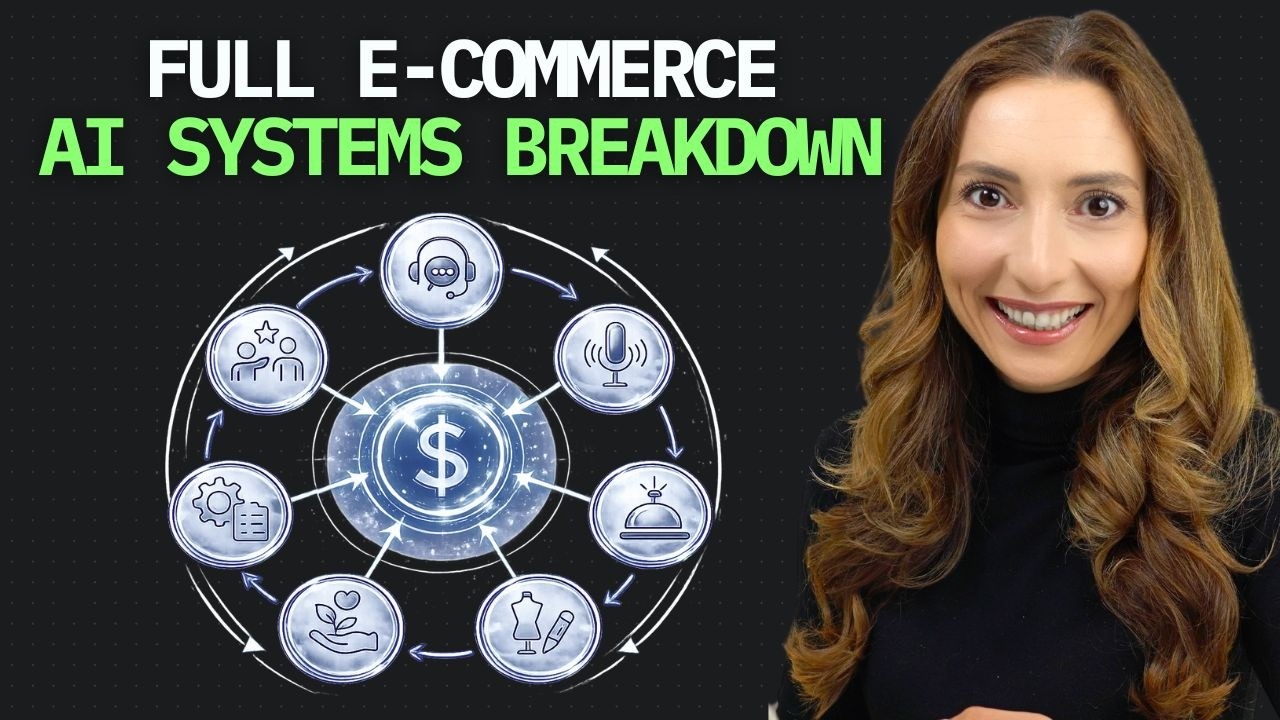
AI identifies trending product → AI generates ad content → ads bring traffic → store converts visitors → AI handles customer support → AI email system retains customers → analytics guide scaling decisions
Each step feeds into the next.
This creates a self-operating business where human effort is mainly focused on strategy and scaling, not daily repetitive tasks.
Scaling with AI Systems (Advanced Growth Layer)
Once automation is in place, scaling becomes significantly easier.
Instead of manually managing every part of the business, you:
- increase ad budgets based on AI performance signals
- expand product testing using AI research tools
- automate customer communication at scale
- optimize conversion rates continuously using data
Scaling becomes controlled rather than emotional.
AI ensures that decisions are based on performance data instead of assumptions.
Common Mistakes in AI-Based E-commerce Systems
Many beginners make critical mistakes when using AI in e-commerce.
The most common mistakes include:
- relying completely on AI without human review
- using generic AI content without editing
- ignoring real market validation
- over-automating too early without understanding basics
- focusing on tools instead of strategy
AI is powerful, but it is not a replacement for business thinking. It is a support system, not a decision-maker.
Final Thoughts
AI has transformed e-commerce into a highly scalable and efficient business model. Instead of manually managing every task, businesses can now operate through intelligent systems that automate research, marketing, support, and optimization.
However, success still depends on strategy, product selection, and execution discipline.
The winning formula is:
Human strategy + AI execution + automated systems + continuous optimization
When these elements combine, e-commerce becomes not just a business, but a scalable digital system that grows with minimal manual effort.
FAQ (Frequently Asked Questions)
1. Can AI fully replace manual work in e-commerce?
No, AI can automate tasks but strategy and decision-making are still required.
2. What should I automate first in my store?
Start with email marketing and customer support automation for quick impact.
3. Do I need expensive AI tools to start?
No, many AI tools have free or low-cost versions suitable for beginners.
4. Is AI necessary for dropshipping success?
Not mandatory, but it significantly improves efficiency and scaling speed.
5. What is the biggest advantage of AI in e-commerce?
Speed, automation, and data-driven decision-making.