
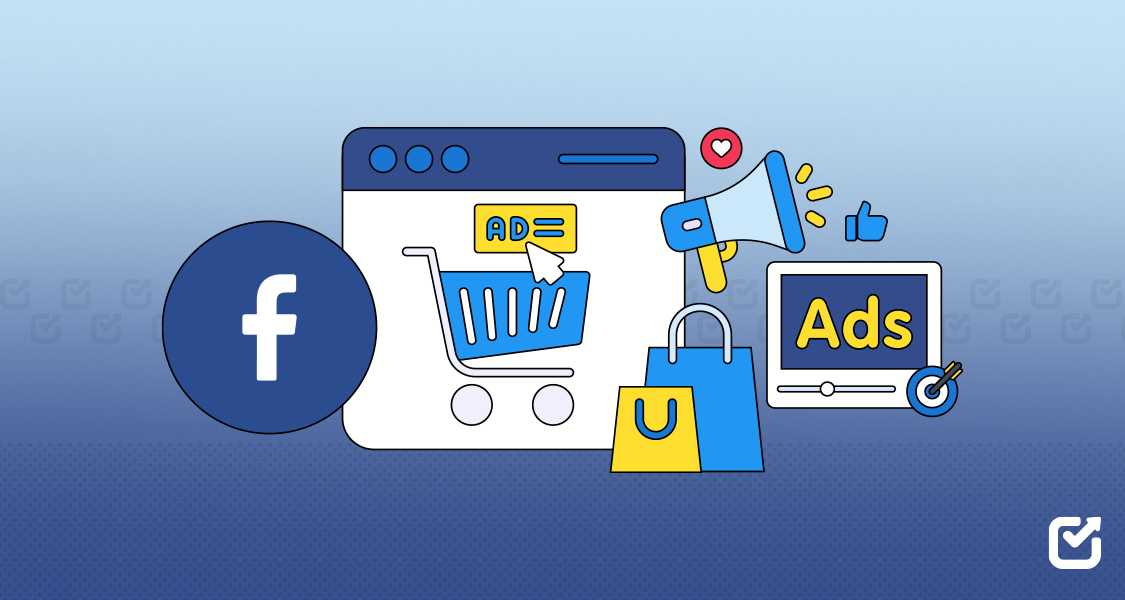
Facebook Ads remain one of the most powerful traffic sources for e-commerce and dropshipping when used correctly. However, most beginners lose money because they treat ads as a guessing game instead of a structured testing system. In advanced e-commerce, Facebook Ads are not about “running ads” but about building a data-driven acquisition machine.
Successful advertisers understand one simple truth: Facebook does not sell products, it distributes attention. Your job is to match the right audience with the right message using structured testing, creative strategy, and scaling systems.
In 2026, competition is higher, CPMs are more expensive, and audiences are more aware. This means random ad testing no longer works. You need a system that focuses on creative quality, audience targeting logic, and conversion optimization.
Understanding How Facebook Ads Actually Work
Before scaling ads, you need to understand how the system works. Facebook Ads operate on machine learning. The algorithm tests your ad on small audiences first, then expands reach based on performance signals like clicks, watch time, engagement, and purchases.
This means your creative is more important than your targeting. Many beginners spend too much time adjusting interests and demographics, but advanced advertisers focus on content quality instead.
Facebook identifies winning ads based on behavior. If people stop scrolling, watch videos, click links, or purchase, the algorithm pushes the ad further.
So the real goal is not just targeting—it is creating ads that naturally attract attention and generate engagement.
Creative Strategy: The Real Secret of Profitability
In modern e-commerce advertising, creative is everything. A weak product with strong creative can outperform a strong product with weak creative.
Winning creatives follow three key principles: hook, engagement, and clarity.
The hook is the first 2–3 seconds of the ad. It decides whether the viewer continues watching or scrolls away. Strong hooks include problem statements, curiosity triggers, or visual demonstrations.
Engagement is what keeps the viewer watching. This can be achieved through storytelling, demonstrations, or relatable situations. The longer someone watches, the stronger the algorithm signal becomes.
Clarity is the final stage. The viewer must understand what the product is and why it matters. If the message is unclear, even high engagement will not convert into sales.
Advanced advertisers always test multiple creative angles for the same product instead of relying on one ad.
Campaign Structure for Scaling
A proper Facebook Ads structure is essential for consistent profitability. Instead of random campaigns, advanced sellers use a structured funnel approach.
At the testing stage, multiple ad sets are created with different creatives. The goal is not immediate profit but data collection. You are identifying which creative and audience combination performs best.
Once a winning ad is found, it moves to the scaling phase. Scaling means increasing budget gradually while maintaining performance. Sudden large increases can reset algorithm learning and reduce efficiency.
There are two main scaling methods: vertical scaling and horizontal scaling.
Vertical scaling means increasing budget on a winning ad set. Horizontal scaling means duplicating winning ads into new audiences or campaigns.
Advanced advertisers usually combine both methods to maximize reach while maintaining stability.
Audience Targeting in 2026
Audience targeting has changed significantly over the years. Facebook’s algorithm is now strong enough to find buyers without extremely detailed targeting.
Broad targeting is becoming more effective because it allows the algorithm to optimize faster. However, interest-based targeting is still useful during the testing phase.
The key is not over-segmentation. Too many narrow audiences reduce data efficiency and increase costs.
Instead, advanced sellers focus on intent signals. These include engagement behavior, video views, and past purchase activity.
Retargeting is also extremely important. Most customers do not buy on the first visit. Retargeting campaigns focus on users who interacted with ads, visited the store, or added items to cart.
Optimization and Data Analysis
Running ads without analyzing data is one of the biggest mistakes in e-commerce.
Key metrics include CTR (click-through rate), CPC (cost per click), CPM (cost per thousand impressions), and ROAS (return on ad spend).
CTR tells you how strong your creative is. A low CTR means your hook or content is weak.
CPC shows how expensive your traffic is. High CPC usually indicates weak engagement or poor targeting.
ROAS is the most important metric because it directly shows profitability.
Advanced advertisers do not rely on one metric—they analyze the full funnel to identify weak points.
Scaling Strategies That Actually Work
Scaling is where most beginners fail because they increase budgets too fast or change too many variables at once.
Successful scaling is gradual and controlled. When a winning ad is identified, budget increases slowly while monitoring performance.
If performance remains stable, scaling continues. If performance drops, adjustments are made in creatives or targeting.
Another powerful scaling method is creative expansion. Instead of only increasing budget, new ad variations are created based on the winning concept.
This allows continuous growth without exhausting the audience.
Common Mistakes in Facebook Ads
Most beginners lose money due to predictable mistakes.
One major mistake is changing too many things at once. When multiple variables are changed, it becomes impossible to identify what caused success or failure.
Another mistake is ignoring creative testing. Many people focus only on targeting and forget that creative is the main driver of performance.
Some also kill ads too early. Facebook ads need learning time. Early performance is not always stable.
Over-optimizing campaigns is also a common issue. Constant adjustments prevent the algorithm from stabilizing.
Final Thoughts
Facebook Ads are still one of the most powerful tools for scaling e-commerce businesses, but only when used strategically.
Success depends on creative quality, structured testing, data analysis, and disciplined scaling. Random advertising leads to losses, while system-based advertising leads to predictable growth.
In modern e-commerce, advertisers who understand psychology, content creation, and data analysis consistently outperform those who rely on guesswork.
Facebook Ads are not about spending money—they are about controlling attention and converting it into sales through strategy.
FAQ (Frequently Asked Questions)
1. Are Facebook Ads still profitable for dropshipping?
Yes, Facebook Ads are still profitable, but only when campaigns are structured properly with strong creatives and testing systems.
2. How much budget is needed to start Facebook Ads?
You can start with a small testing budget, but enough capital is needed to test multiple creatives and gather data before scaling.
3. What is more important: targeting or creative?
Creative is more important than targeting. A strong ad can perform well even with broad targeting.
4. Why do most Facebook Ads fail?
Most ads fail due to weak creatives, lack of testing, poor data analysis, and impatience in scaling.
5. How long does it take to find a winning ad?
It depends on testing strategy, but typically multiple creatives need to be tested before identifying a consistent winner.